Blog
Insights, updates and stories from our team
Ingredients2026/11/10
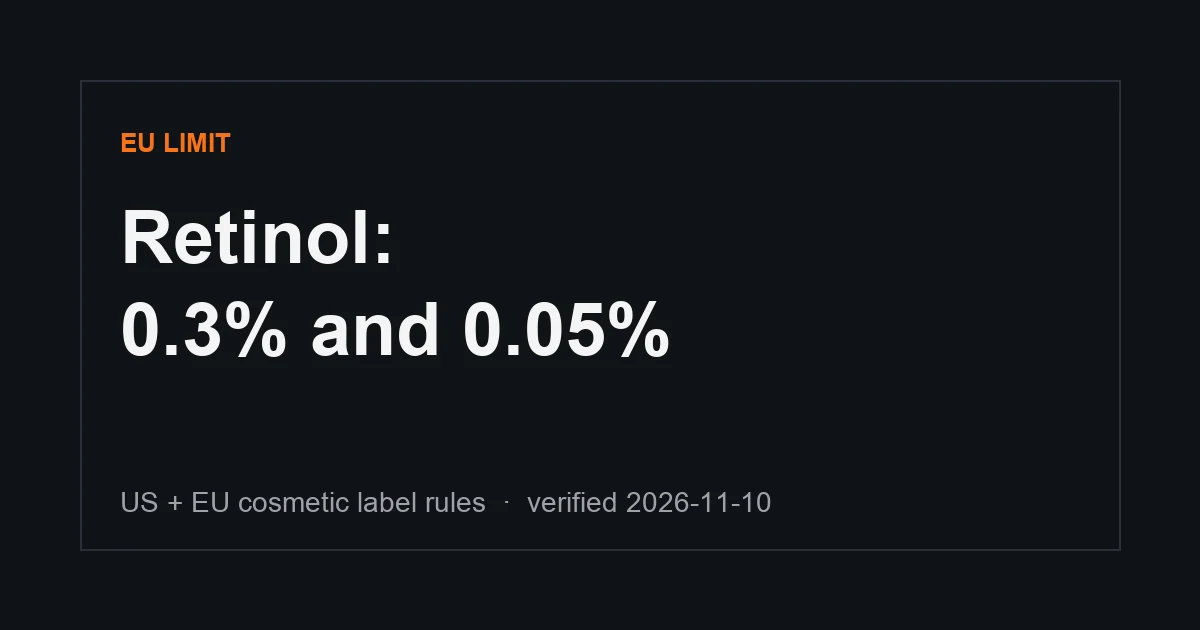
Retinol in EU cosmetics: the 0.3% limit
The EU caps vitamin A in cosmetics at 0.05% retinol equivalent in body lotion and 0.3% in other leave-on and rinse-off products (Annex III No 376), and mandates a vitamin A warning on the label. The US has no federal cap.
Ingredients2026/11/10
Is salicylic acid a drug in the US?
Salicylic acid is a cosmetic ingredient until the label claims acne treatment. Then it is an OTC drug under 21 CFR 333.310, at 0.5–2%, with Drug Facts. Here is where the line sits and how to label each side.
Ingredients2026/11/10
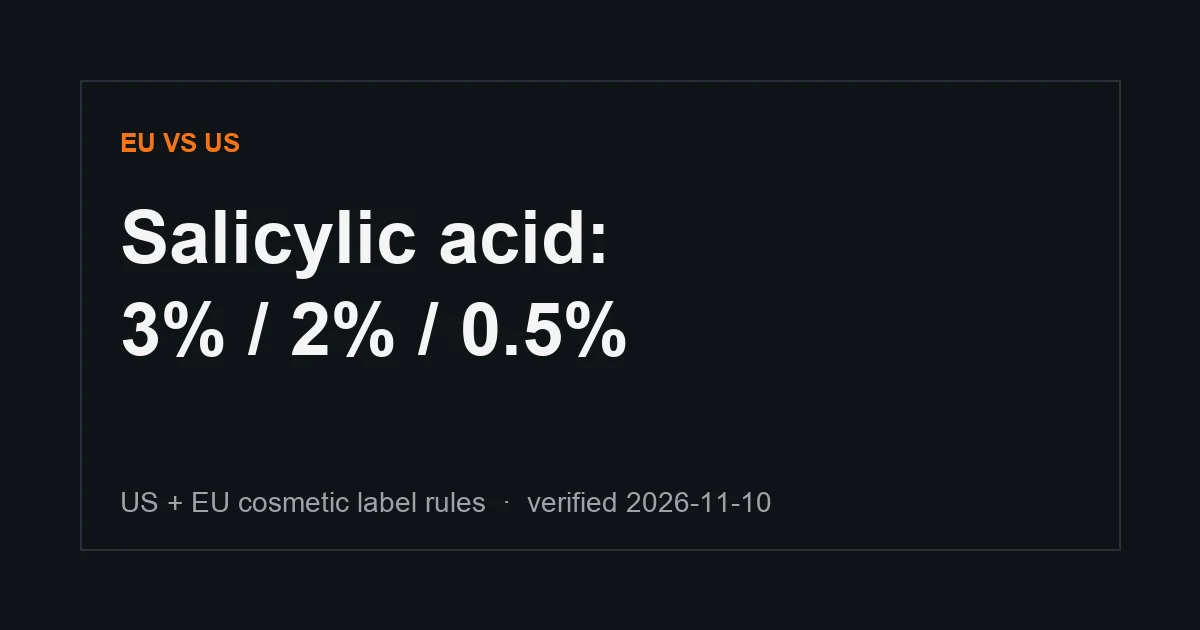
Salicylic acid limits: EU vs US for cosmetics
The EU caps salicylic acid at 3.0%, 2.0% or 0.5% depending on product type (Annex III No 98). The US sets no cosmetic limit but treats acne claims as a drug at 0.5–2%. Side-by-side table and label rules.
Ingredients2026/11/10
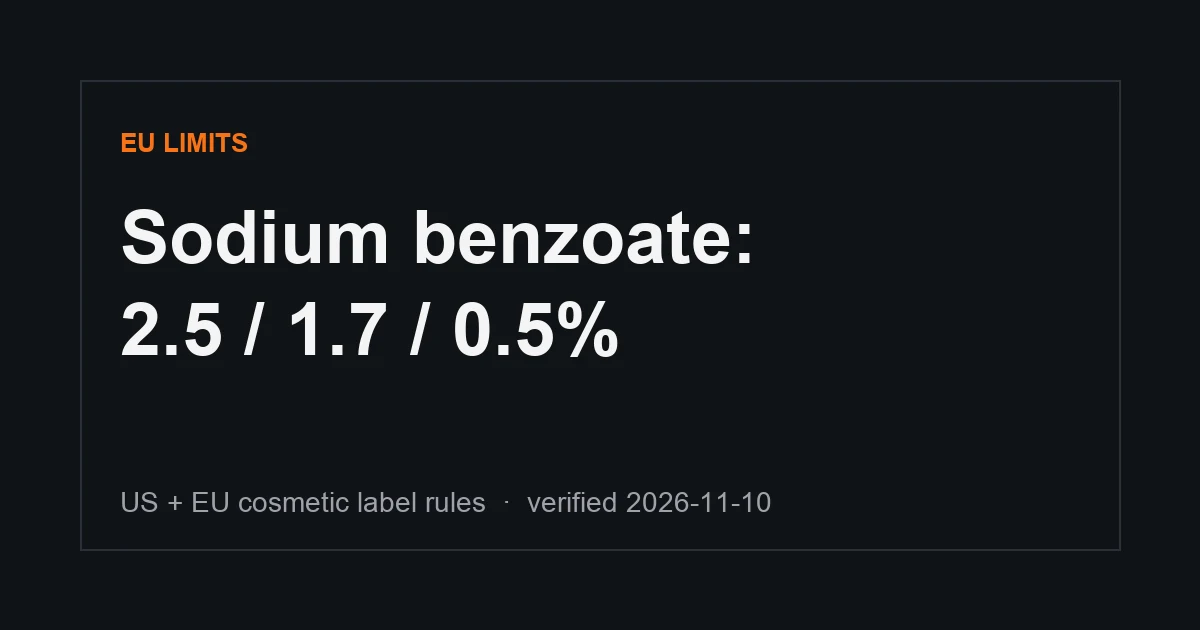
Sodium benzoate in cosmetics: the 2.5%, 1.7% and 0.5% EU limits
In the EU, benzoic acid and sodium benzoate are capped — as acid — at 2.5% in rinse-off, 1.7% in oral products and 0.5% in leave-on cosmetics (Annex V No 1). The US has no federal limit.
Ingredients2026/11/10
Triclosan in the EU: which products may use it, at what limit
The EU allows triclosan only in six product types, at up to 0.3%, with a toothpaste ban for children under three and an obligatory warning (Annex V No 25). The US sets no federal cosmetic limit, and triclosan is no longer allowed in OTC antibacterial washes.
EU Market2026/11/10
UV filters in the EU vs the US: what each market allows
The EU allows modern organic filters such as Bemotrizinol (Bis-Ethylhexyloxyphenol Methoxyphenyl Triazine) at 10% (Annex VI No 25) — filters the FDA has not approved for the US. US sunscreens must use FDA-approved active ingredients and are drugs; EU sunscreens are cosmetics.